

🔥 TL;DR: Most founders building in public aren’t building - they’re performing.
What looks like transparency is often ego disguised as strategy.
Your followers aren’t your customers, and likes aren’t validation.
Real startups are built through focus, feedback, and solving painful problems - not storytelling for applause.
Building in Public is Just Ego in Drag
Here's the thing about performance.
When you're on stage, you're not building.
You're performing.
Most startup founders have confused the two.
The transparency trap
Building in public sounds noble.
Sharing your journey.
Being vulnerable.
Creating accountability.
It's not.
It's a sophisticated form of personal branding disguised as business strategy.
The math is simple:
Every minute you spend crafting the perfect "transparent" tweet is a minute you're not talking to customers.
Every vulnerability you perform for your audience is emotional energy you're not investing in solving real problems.

Source : Dreamtimes
Two kinds of founders
Type A: The quiet builders.
Patrick Collison didn't tweet his way to a $70 billion valuation.
When Stripe was struggling with its first major technical hurdle in 2011, Patrick didn't blog about his journey.
He fixed the problem.
His brother John didn't share daily updates about their revenue metrics.
They focused on making payments work better for developers.
Result? Stripe processed $1.4 trillion in payments in 2024 - a 38% increase from the previous year.
The company now supports half of the Fortune 100.
Joel Gascoigne took a different approach with Buffer.
He shared everything - salaries, revenue, struggles.
But here's what made it work:
Buffer has shared their finances, team salaries, and other key metrics openly since 2013.
The transparency wasn't about Joel's personal brand.
It was about building a culture of trust within his company.
The difference?
Collison built in private and succeeded massively.
Gascoigne built in public but did it for his team, not his ego.
Both approaches can work - if you're honest about your motives.
Type B: The performance artists.
Adam Neumann turned WeWork into his personal reality show.
He charged his own company $5.9 million for trademark rights to the word "we" - a sum he gave back after intense criticism.
He borrowed hundreds of millions against his stock.
His "visionary" storytelling convinced investors to pump in $47 billion while the company burned $1.9 billion in a single year.
Elizabeth Holmes mastered the art of public performance.
Holmes was repeatedly hailed as "the next Steve Jobs," convincing investors like SoftBank and Peter Thiel to give them millions.
She gave TED talks, graced magazine covers, and built a $9 billion valuation on technology that didn't work.
Both fell spectacularly.
WeWork's valuation plummeted to under $7 billion.
Holmes is serving nearly ten years in prison.
The narcissism research doesn't lie
Those who expressed interest in entrepreneurship but hadn't yet started a business - what are colloquially known as "wantrepreneurs" - do indeed tend to be more narcissistic.
But here's the kicker:
When researchers looked to see if actual, successful entrepreneurs exhibited the same self-aggrandising personality traits, they came up empty-handed.
Translation:
The people who talk about building companies on social media are usually not the ones actually building successful companies.
The audience confusion
Your X followers are not your customers.
Read that again.
The people cheering your journey want you to succeed.
They're emotionally invested in your story.
Their feedback is worthless because it's filtered through the lens of fandom, not need.
Real feedback comes from frustrated users who can't accomplish their goals.
From prospects who choose your competitors.
From customers who cancel their subscriptions.
This feedback is harsh.
Unfiltered.
Often brutal.
Building in public insulates you from this valuable pain.
The ego tells
When a founder starts talking about "changing the world" instead of solving specific problems, that's ego.
When they spend more time explaining their vision than shipping features, that's ego.
When their social media presence becomes more polished than their product, that's ego.
The same excess of ego that causes founders to think their rightful place is strutting a stage like a latter-day Steve Jobs also prevents start-up CEOs from hiring the best talent and heeding their advice.
What the failures teach us
According to a recent PitchBook survey, "approximately 3,200 private venture-backed U.S. companies have gone out of business this year."
Combined, those companies raised north of $27 billion.
Most of these failures weren't dramatic.
No prison sentences.
No HBO documentaries.
Just founders who confused building an audience with building a business.
They optimised for engagement instead of revenue.
For followers instead of customers.
For personal validation instead of market validation.
The accountability illusion
"Building in public creates accountability."
No, it doesn't.
It creates the appearance of accountability to an audience that doesn't matter.
Real accountability comes from:
Customers voting with their wallets
Revenue hitting (or missing) targets
Employees depending on your decisions for their livelihoods
Investors expecting returns on their capital
Social media metrics are vanity. Business metrics are sanity.
The stealth alternative isn't silence
The opposite of performing isn't hiding.
It's focusing.
Successful founders don't need to announce their every move because they're too busy making moves.
They don't need to share their struggles because they're too busy solving them.
They understand something the performance artists miss:
The market doesn't care about your journey.
It cares about your destination.
The simple test
Ask yourself this question:
Would your customers rather you spend today tweeting about your progress or improving their experience with your product?
Your answer reveals everything.
The real transparency
Want to be transparent? Share the numbers that matter:
Customer acquisition cost
Monthly recurring revenue
Churn rate
Time to profitability
Customer satisfaction scores
These metrics tell a story worth sharing.
They're honest indicators of business health, not feel-good content designed to generate likes.
But here's the thing:
These numbers aren't engaging on social media.
They don't generate the dopamine hit of personal storytelling.
They don't feed the founder's ego.
Which is exactly why they matter.
The path forward
If you're already caught in the building-in-public trap, here's your way out:
Stop performing.
Start building.
Spend 90% of your time serving customers.
Spend 10% (if that) sharing updates.
Hire people who will tell you hard truths, not cheerleaders who amplify your vision.
Measure progress by customer outcomes, not social media engagement.
Remember why you started:
To solve a problem, not to become famous for solving a problem.
The uncomfortable truth
Most building in public is ego dressed up as transparency.
Performance masquerading as process.
Personal branding disguised as business strategy.
The founders who succeed understand that building great products requires humility, focus, and obsessive attention to customer needs.
These qualities are incompatible with the constant performance required by building in public.
Your choice isn't between transparency and secrecy.
It's between serving your ego and serving your customers.
Choose wisely.
The market is watching.
But not on X.
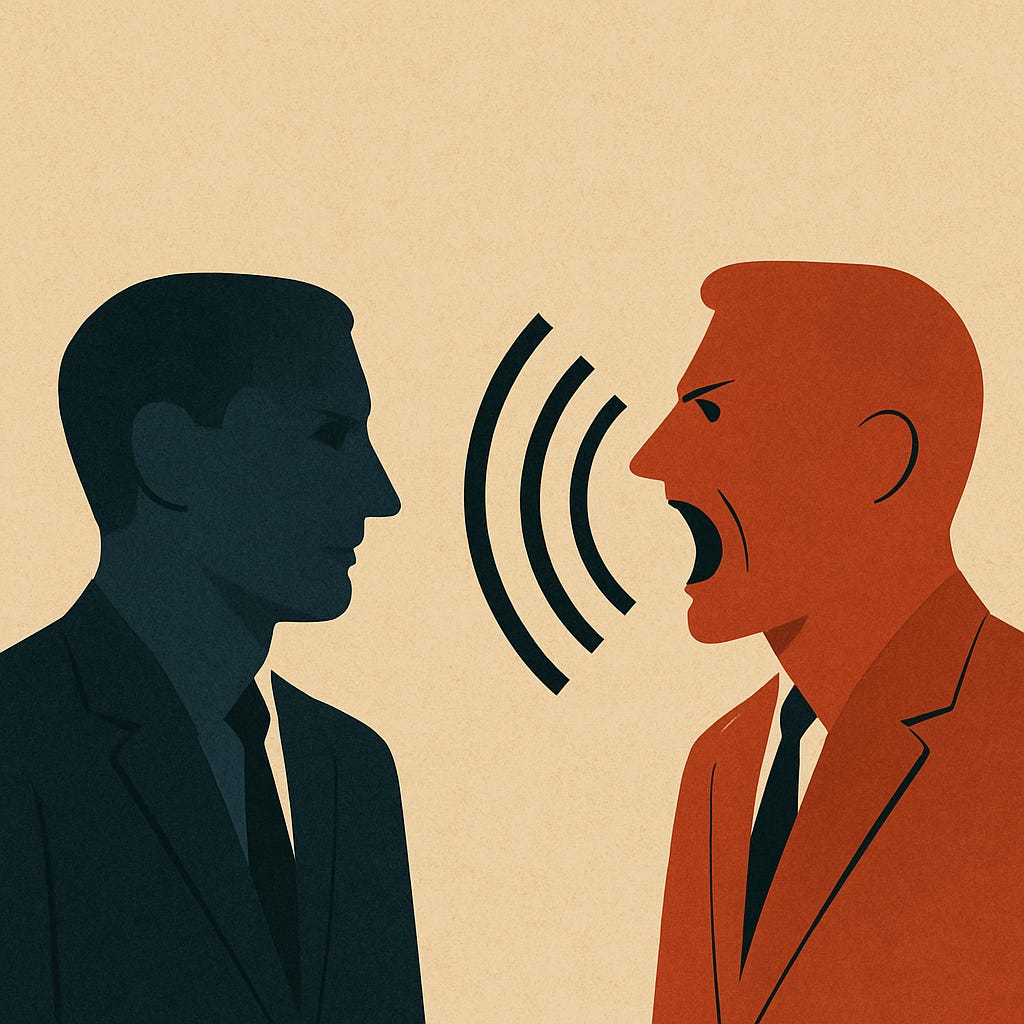
Source : The Influence Journal
References
Paddle. (December 8, 2023). "Build-in-public strategy: Benefits + 10 examples." https://www.paddle.com/blog/build-in-public-boost-your-engagement
Torch. (August 15, 2019). "Why do founders have big egos? | Healthy Narcissism." https://torch.io/blog/healthy-narcissism-and-founder-egos/
Inc.com. (May 30, 2021). "New Study: Wannabe Entrepreneurs Tend to Be Narcissists. Real Ones? Not So Much." https://www.inc.com/jessica-stillman/narcissism-entrepreneurship-study-tilburg-university.html
LinkedIn - David Nelson. (March 9, 2023). "Startups Building in Public: Is It Right for You?" https://www.linkedin.com/pulse/startups-building-public-right-you-david-nelson
TNGlobal. (October 12, 2022). "The ego has (crash) landed: Startup founders need to keep their egos in check if they hope to succeed." https://technode.global/2022/04/18/the-ego-has-crash-landed-startup-founders-need-to-keep-their-egos-in-check-if-they-hope-to-succeed/
The Business of Business. (November 13, 2020). "These fraudulent founders were once hailed as 'the next Steve Jobs' of their now-disgraced startups." https://www.businessofbusiness.com/articles/startup-founders-fraud-theranos-wework-nikola/
CNBC. (January 14, 2022). "Founders get blamed for start-up scandals, but where were the investors?" https://www.cnbc.com/2022/01/14/founders-get-blamed-for-start-up-scandals-but-where-were-investors.html
Simple Closure. (January 1, 2024). "The Biggest Startup Failures of All Time (& Why They Failed)." https://simpleclosure.com/blog/posts/big-startup-failures/
TechCrunch. (December 30, 2023). "Remembering the startups we lost in 2023." https://techcrunch.com/2023/12/30/remembering-the-startups-we-lost-in-2023/
Buffer. "About Us." https://buffer.com/about
KITRUM. (April 24, 2025). "Stripe's Founders: The Story of Collison Brothers." https://kitrum.com/blog/stripe-founders-the-story-of-collison-brothers/
Million Stories Media. (December 5, 2024). "10 Moves That Took Stripe to $70 Billion in Valuation in 2024." https://blog.getlatka.com/stripe-revenue/
The Alternative: Build What Matters
You don’t need a bigger audience.
You need a sharper problem.
You don’t need to share your journey.
You need to create results worth sharing.
If you're tired of shouting into the void of social media, of optimising for applause instead of outcomes, there’s another path:
It’s quieter.
Less performative.
More uncomfortable.
But far more effective.
In September 2025, a small group of founders will join the Foundarity Sprint - not to “build in public,” but to build in focus.
No growth hacks.
No vanity metrics.
No ego theatre.
Just 3 days of getting really clear and building your bulletproof plan to have an amazing end to 2025 and an even better 2026.
Doors open on 1st September.
8 Seats total
Doors close on 12th September.
Sprint starts Monday 22nd September until Wednesday 24th September.
The kind of feedback that doesn’t come with likes, but with revenue.
This isn’t for everyone.
It’s not free.
And it doesn’t promise virality.
It promises clarity.
Momentum.
And the uncomfortable thrill of actually building a real business.
Stop performing. Start building.
Join the Sprint by dropping “SPRINT” in the comments below or DM me.