
The Uncomfortable Truth
Spending Too Much Time on Product is the #1 Killer of B2B Startups

In the high-stakes world of B2B startups, a silent killer lurks within the very passion that drives founders forward: product obsession.
While building an exceptional product is undeniably important, the uncomfortable truth is that spending too much time perfecting your product is often the primary reason B2B startups fail.

Source : The Galima Group
This counterintuitive reality challenges the core belief of many technical founders who entered the startup ecosystem with dreams of building revolutionary solutions.
Let's explore why excessive product focus becomes quicksand for promising B2B ventures, and what insights can help you recognise when we're falling into this common trap.
The Seductive Allure of Product Development
There's something deeply satisfying about product development.
Each feature added, bug fixed, or interface improved delivers a tangible sense of progress.
For technically-minded founders especially, the product represents the physical manifestation of their vision - something they can control, refine, and perfect.
Product development also offers clear metrics of progress: lines of code written, features shipped, and technical problems solved.
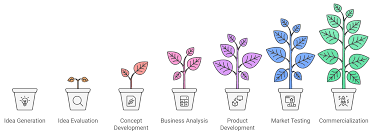
Source : Thompson Rivers University
This measurability provides comfort in the chaotic early stages of building a company.
While customer acquisition, pricing strategies, and market positioning remain frustratingly ambiguous, the product roadmap offers a clear path forward.
This is precisely what makes product obsession so dangerous.
It feels productive, purposeful, and aligned with the company's mission, even when it's actively undermining success.
Historical Casualties of Product Obsession
Better Place: The $850 Million Electric Vehicle Failure
Founded in 2007, Better Place aimed to revolutionise electric vehicle infrastructure with battery-swapping technology.
Visionary founder Shai Agassi secured an astonishing $850 million in funding and built a technically impressive system for swapping electric car batteries in under five minutes.
The company spent years perfecting their sophisticated battery-swapping stations and proprietary software systems.
But while the engineering team built an elegant solution, they overlooked a fundamental problem: customers weren't ready to commit to their ecosystem.
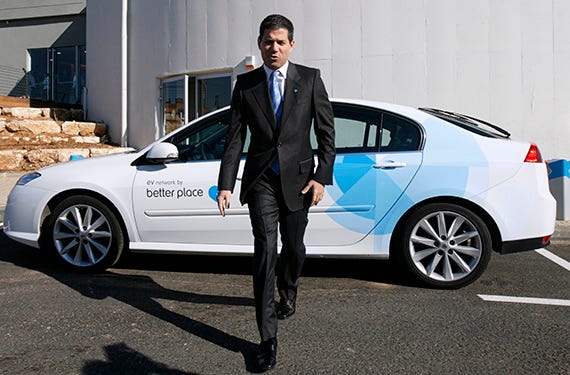
Source : The Atlantic, May 2013
Instead of starting with a minimum viable product and adapting to market feedback, Better Place built a comprehensive infrastructure that required mass adoption to succeed.
By 2013, after deploying fewer than 1,000 cars and a handful of swapping stations, the company declared bankruptcy.
The technology worked perfectly, but the market wasn't there.
Better Place exemplifies how even massive funding can't save a B2B startup that prioritises product perfection over customer validation.
Webvan: A $1.2 Billion Lesson in Premature Scaling
Though partially consumer-facing, Webvan's B2B infrastructure provides a classic example of product over investment.
Launched in 1999, Webvan aimed to revolutionise grocery delivery with a sophisticated automated warehouse system.
The company spent $1.2 billion building state-of-the-art distribution centers and a complex logistics platform before proving their business model worked at scale.
Instead of testing their core assumptions with a lean approach—perhaps using existing grocery stores and manual processes initially - Webvan built the perfect technical solution to a problem they hadn't validated.
Their warehouse automation was a marvel of engineering, but they discovered too late that grocery margins couldn't support their capital-intensive infrastructure.
When the company collapsed in 2001, it left behind cutting-edge distribution centers that had never operated near capacity.
Webvan had built a technical masterpiece while neglecting to verify that customers would use it enough to make the business viable.
Segway: Engineering Brilliance That Missed the Market
While not exclusively B2B, Segway's journey offers invaluable lessons about product obsession.
Launched in 2001 after years of secretive development, the Segway was an engineering marvel that inventor Dean Kamen believed would revolutionise urban transportation.
The company spent years perfecting the self-balancing technology, creating a product that was technically flawless.
What they failed to do was adequately test whether their target markets - including B2B customers like warehouse operators, security firms, and postal services - actually wanted or needed this solution at the price point offered.

Source : Sky News
Despite technical brilliance and initial hype that suggested the company would reach $1 billion in sales faster than any company in history, Segway sold just 10,000 units in its first two years - against projections of 400,000.
The company had created a nearly perfect product but hadn't validated that the market problem was significant enough to drive adoption.
Ultimately, Segway found limited success in niche markets but never achieved the revolutionary impact its extensive product development effort aimed for.
Why B2B Startups Fall into the Product Trap
Several factors make B2B startups particularly susceptible to product obsession:
1. Technical Founder Syndrome
Many B2B startups are founded by technical experts who deeply understand their domain. Their natural inclination is to build solutions to problems they've personally experienced. This intimate knowledge can be both a blessing and a curse - they know exactly what features would have helped them in their previous roles, but may struggle to prioritise what the broader market needs.
2. The Enterprise Software Legacy
B2B software has historically been feature-rich and complex. Many founders carry this mental model, believing their offering must match or exceed incumbent solutions' feature sets to be competitive. This thinking leads to bloated products that try to serve everyone rather than solving a specific problem exceptionally well.
3. The "Just One More Feature" Fallacy
There's always one more feature that could theoretically help win the next customer. Each sales conversation reveals new potential requirements, creating a never-ending cycle of development priorities. This reactive approach to product development fragments focus and prevents the disciplined execution needed to achieve
product-market fit.
4. The Comfort of Controllable Work
Building product is comfortable because it's largely within the founding team's control. By contrast, customer development, sales, and marketing require engaging with the unpredictable outside world where rejection is common and progress is
non-linear. Product work becomes a refuge from these uncomfortable realities.
The Hidden Costs of Product Obsession
The costs of excessive product focus extend far beyond the obvious drain on development resources:
Delayed Market Feedback
Every additional week spent building before getting real customer feedback increases the risk of building something nobody wants. B2B products are particularly vulnerable here, as enterprise needs evolve quickly and are often more complex than founders initially understand.
Cash Burn Without Revenue
B2B startups typically have higher cash burn rates than consumer startups due to larger engineering teams and enterprise-grade infrastructure. Without revenue to offset these costs, excessive product development accelerates the path to insolvency.
Opportunity Cost of Founder Time
Perhaps most critically, every hour founders spend on product refinement is an hour not spent on customer development, sales, fundraising, or team building. These activities often have higher leverage in determining a B2B startup's success than incremental product improvements.
Psychological Entrenchment
The more time and resources invested in a specific product direction, the harder it becomes psychologically to pivot when market feedback suggests a change is needed. This sunk cost fallacy keeps founders pursuing failing strategies long after data indicates a need for change.
The Market Doesn't Care About Your Product (Yet)
Here's the brutal truth that experienced B2B entrepreneurs eventually learn: the market doesn't fundamentally care about your product.
Early B2B customers care about solving their problems, reducing pain, and achieving outcomes.
Your elegantly designed architecture, clever technical solutions, and comprehensive feature set mean nothing if they don't translate directly to customer value.
And until you're actively engaging with customers, you can't really know what they value.
This reality is particularly harsh for technical founders who derive professional satisfaction from building excellent products.
The quality that brought them success in previous engineering roles—attention to technical detail - can become a liability when building a startup.
When Customer Development Should Take Precedence
For most B2B startups, extensive customer development should precede significant product investment.
This means:
1. Problem Validation Before Solution Building
Thoroughly validating that the problem you're solving is painful enough that customers will pay to fix it before writing a single line of code. This requires dozens, sometimes hundreds of customer conversations - far more than most technical founders intuitively allocate time for.
2. Willingness to Pay Assessment
Confirming not just that customers have the problem, but that they have budget allocated to solve it, authority to make purchasing decisions, and urgency to act now rather than later. These factors are particularly critical in B2B contexts where sales cycles are longer and decision-making more complex.
3. Manual Solutions Before Automation
Testing your solution concept with manual processes before building automated systems. This might mean personally delivering services that your product will eventually automate, creating spreadsheet solutions before building platforms, or cobbling together existing tools before developing proprietary ones.
4. Minimum Viable Everything
Applying the minimum viable product philosophy not just to your core offering, but to every aspect of your business: minimum viable marketing, minimum viable sales process, minimum viable customer support. This balanced approach prevents product development from consuming disproportionate resources.
Signs You're Spending Too Much Time on Product
How can you tell if your B2B startup has fallen into the product obsession trap?
Look for these warning signs:
1. Development Roadmap Extends Beyond Three Months
In the early stages, if your detailed product roadmap extends beyond a quarter, you're likely planning features without sufficient customer validation. True product-market fit requires rapid iteration based on market feedback.
2. Fewer Than Five Customer Conversations Per Week
Founding teams should be having multiple substantive customer conversations weekly. If product development is consistently prioritised over these interactions, you're building in an information vacuum.
3. "Launch Anxiety" Paralysis
Repeatedly delaying product launch to add "just one more feature" indicates unhealthy perfectionism. B2B products improve through real-world usage, not through extended gestation periods.
4. Sales Responsibility Rests Solely With "Later Hires"
If the founding team sees sales as something to be delegated to future hires rather than a core function they must master themselves, they're likely overvaluing product relative to commercialisation.
5. Product Decisions Made Without Customer Input
When feature prioritisation happens primarily in internal meetings rather than in response to explicit customer feedback, the product is being built for the team, not the market.
The Path Forward: Balanced Company Building
The solution isn't to neglect product development entirely, but rather to pursue a balanced approach to company building that recognises all critical functions:
1. Time-Box Product Development
Establish strict time constraints for initial product development phases, forcing the team to focus on core value rather than peripheral features. This constraint often leads to more focused, valuable products.
2. Implement "No-Code Fridays"
Dedicate specific days where the entire team, including technical founders, focuses exclusively on customer development, sales, or marketing activities. This creates rhythm and prevents product work from continuously crowding out other priorities.
3. Establish Non-Product Success Metrics
Define and track key performance indicators beyond product milestones - customer conversations conducted, sales meetings scheduled, marketing experiments run - and give them equal prominence in team reviews.
4. Build Commercialisation Muscles Early
Involve technical founders directly in early sales activities, not to turn them into salespeople, but to build the market intuition they'll need to make informed product decisions later.
5. Create Customer Advisory Processes
Formalise mechanisms for continuously injecting customer perspectives into product development, such as customer advisory boards, regular user interviews, and structured feedback loops.
The Uncomfortable Balance
Perhaps the most difficult aspect of this reality is that there is no universal formula for the "right" balance between product focus and market engagement.
The appropriate distribution varies based on company stage, market maturity, and founder expertise.
What remains constant, however, is that most technical founders instinctively allocate too much time to product and too little to understanding their market.
Recognising this natural bias is the first step toward correcting it.
Conclusion: The Product Paradox
The ultimate paradox of B2B startup success is that building a truly great product requires spending less time on the product itself and more time understanding the problem, customer, and market.
Only through this broader perspective can founders develop the insights needed to build products that genuinely resonate with customers.
For many founders, this requires a profound identity shift - from seeing themselves primarily as product creators to seeing themselves as business builders who happen to express their vision through product.
This transition is often uncomfortable but ultimately liberating, opening new paths to impact that pure product focus never could.
The next time you find yourself deep in product development, ask whether you're building based on validated customer needs or your own assumptions.
The answer might reveal whether you're on the path to success or falling victim to the number one killer of B2B startups.
The most successful B2B founders eventually learn that their greatest product isn't their software, platform, or technology - it's the company they build to deliver it.
And building a great company requires balanced attention across all critical functions, not just the one that happens to be most comfortable or familiar.

Source : CMS Critic, February 2024
Why did I write this post ? I am fascinated by startups and embrace the whole process that a founder embarks upon post their initial epiphany or eureka moment, i.e. idea 💡 when they discover a problem they feel obsessed to solve for the world. However, I personally have to confess, as a recovering Founder, Co-Founder and supporting multiple Founders, Co-Founders, Leadership teams of startups across the world 🌍 have noticed, depending on interestingly the individuals age or experience or both, an amazing variety of lens and perspectives on how best to address the item discussed above 👶 . I have and am constantly amazed about how founders by default play to their comfort zone and do not face into enough the items that they need to do. I am not sure if this is fear, uncertainty, doubt or lack of confidence but it’s definitely a hurdle and challenging to manage. I do hope my observations of working in many startups that I have shared gives you an insight into what to watch for as you tread your path. But as ever will be sharing more on my thoughts on how to do address this later.
If you liked this post then please subscribe and follow me here as I also will continue to import episodes of my podcast, The G&T Sessions into the future. You can also follow me on X here https://www.x.com/andrewjturner and if you would like to subscribe directly to my podcast here https://www.linktr.ee/thegtsessions
Ciao for now